
Digital Product Passports (DPPs) are becoming increasingly important as businesses face growing demands for transparency, sustainability, and accountability across their supply chains.
By creating a digital record of a product’s lifecycle, Digital Product Passports help organizations improve traceability, strengthen regulatory compliance, and build greater customer trust.
As regulations evolve and sustainability expectations rise, DPPs are emerging as a key enabler of responsible and data-driven business practices.
Why Businesses Are Investing in DPPs:
Modern consumers and regulators expect greater transparency than ever before.
They want answers to questions such as:
- Where was this product made?
- What materials were used?
- What is its environmental impact?
- Can it be repaired or recycled?
A Digital Product Passport provides these answers through a secure and accessible digital record.
Business Benefits of DPPs:
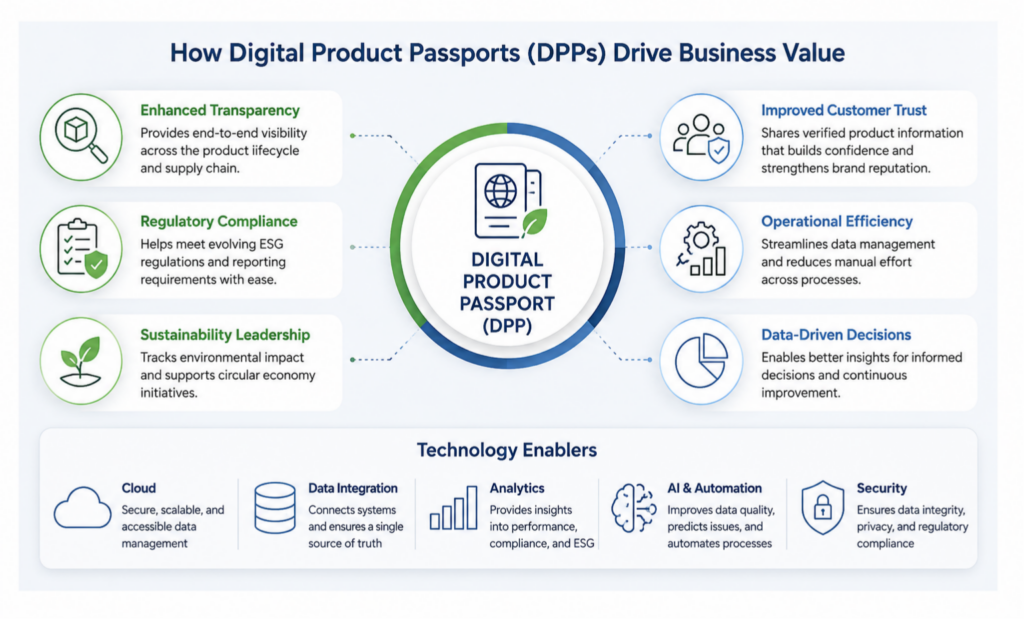
- Faster compliance reporting
- Improved customer trust
- Better ESG performance tracking
- Enhanced supply chain visibility
- Data-driven decision-making
Organizations that implement Digital Product Passports gain greater visibility across their product lifecycle while improving regulatory readiness.
Challenges Organizations Face:
Despite the benefits, many organizations face significant challenges when implementing DPP initiatives:
- Data silos
- Legacy systems
- Lack of product traceability
- Complex supplier networks
Without a centralized approach to data management, maintaining accurate product information becomes increasingly difficult.
Technology’s Role in DPPs:
Successful DPP initiatives rely on modern technology platforms that can collect, manage, and analyze large volumes of product data.
Key technologies include:
- Cloud infrastructure
- Data analytics platforms
- Artificial intelligence
- Real-time reporting systems
- Data integration tools
These technologies help organizations improve visibility, maintain compliance, and support sustainability initiatives.
Preparing for the Future:
Organizations that begin their DPP journey today will be better positioned to meet evolving regulatory requirements while unlocking new opportunities for operational efficiency and sustainability.
As global regulations continue to evolve, Digital Product Passports are expected to become a standard component of product lifecycle management.
Conclusion:
Digital Product Passports are not simply a compliance requirement—they are becoming a strategic business asset.
Organizations that invest in DPP capabilities today can improve transparency, strengthen customer trust, and gain a competitive advantage in an increasingly sustainability-focused marketplace.
